
Revitalization of a necrotic mature tooth with external root resorption: Case report and mini review of the literature

Article Sidebar
-
Regenerative endodontics, revitalization, platelet-rich fibrin, root resorption, mineral trioxide aggregate
Abstract
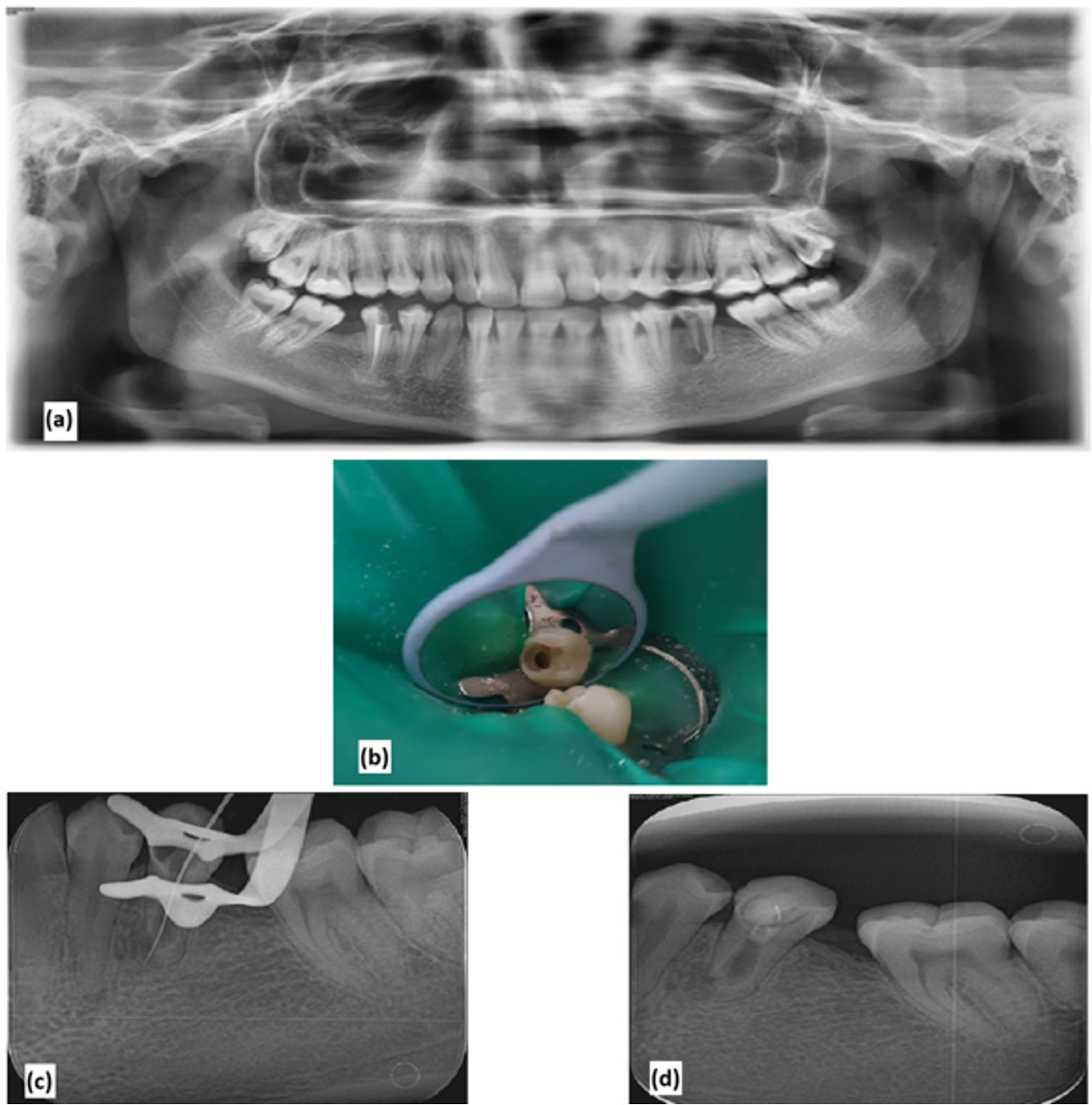
Although the conventional apexification procedure—which uses long-term intracanal calcium hydroxide medication to promote the formation of a calcified barrier at the apical foramen—has been widely accepted for more than 40 years, it has significant drawbacks. The weakening effect of prolonged calcium hydroxide application on thin dentinal walls, the resulting high incidence of root fractures, the failure to promote canal wall thickening even when a mineralized barrier is formed using mineral trioxide aggregate, and the unfavorable crown-to-root ratio all contribute to increased susceptibility to fracture. Regenerative endodontic procedures, which apply the tissue-engineering triad of stem cells, biomimetic scaffolds, and growth factors, have therefore been proposed as a biologically based alternative for teeth with pulp necrosis arising from trauma, caries, or developmental anomalies. Although these procedures were developed for immature teeth, protocols employing revascularization and autologous platelet concentrates as scaffolds are increasingly being explored in mature teeth, for which the supporting evidence remains limited. This report describes the regenerative endodontic treatment of an asymptomatic necrotic mature left mandibular second premolar with a chronic apical abscess and external inflammatory root resorption in a 19-year-old woman, using autologous platelet-rich fibrin as a scaffold sealed with mineral trioxide aggregate. Over 12 months of follow-up the tooth remained asymptomatic, the sinus tract resolved, the periapical radiolucency decreased, the resorptive defect appeared arrested, and the tooth responded to thermal testing while remaining unresponsive to electric pulp testing. A focused review of the literature is included to situate this approach among the available alternatives. Within the limitations of a single case with short-term follow-up, this procedure may represent a treatment option for mature necrotic teeth with external inflammatory root resorption; controlled studies with longer follow-up are required.
Full text article
Authors
Copyright © 2026 The Author(s)

This work is licensed under a Creative Commons Attribution 4.0 International License.

This is an Open Access article distributed under the terms of the Creative Commons Attribution 4.0 International License (CC BY 4.0), which permits unrestricted use, distribution, and reproduction in any medium, provided the original work is properly cited.

